Wednesday, October 07, 2009

No more nonprofits!

We need to do away with nonprofits in America
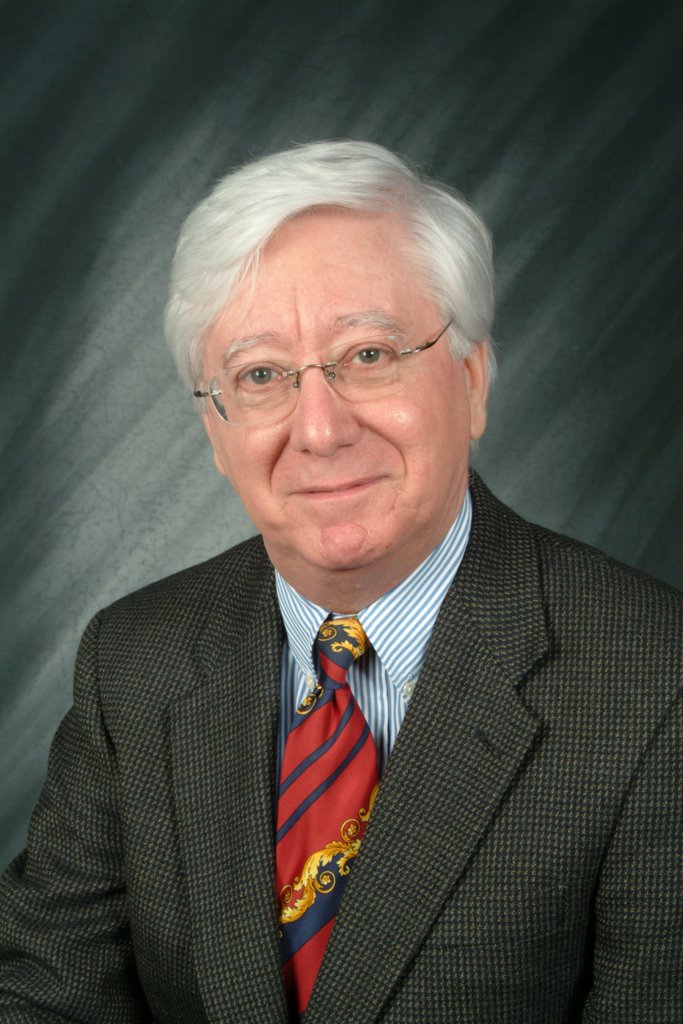
by Dr. Stephen L. Goldstein, "The Fundraising Guru"

1st published in The South-Florida Sun-Sentinel, August 23, 2004


Hardly anyone knows what a nonprofit really is. Most people will tell you that it's a charity that does good things for society, so they can deduct contributions to it from their taxes. Others will admit to thinking that nonprofit implies something second-rate in America--a cut below for-profit businesses, in which making money, not asking for it, is the name of the game. To them, the big players are in the rough-and-tumble business world. Lesser mortals work in nonprofits--taking handouts, frequently trying to solve social problems that seems never to get fixed.


The longtime head of one prestigious cultural group even told me that a nonprofit is an organization that, "because of what it does, cannot make money." (The surprise is not that he was constantly in debt, even on the verge of bankruptcy, but that he could continue to bamboozle donors into supporting her year after year.)


I guess that only about one in 10 people knows that nonprofits certainly can "make" money, but that what defines and distinguishes them from for-profit businesses is simply what they do with any money they generate above expenses.


Nonprofits call their extra dollars "surplus," not profit, and they reinvest them in their organization. They don't distribute their excess funds to shareholders who are entitled to a dividend, as businesses may. My cultural chief aside, nonprofits not only can make money, they should. The term really means "not having profit for investors to share in."


So, we need to do away with nonprofit organizations. Well, not with them per se, but with the term nonprofit and replace it with a clear, positive one--like Community Reinvestment Organization or CIO.


First, the word "investment" in CIO might help remind people working with them that the donated dollars they allocate to doing good in their community should produce a documentable return. For example, a cultural program might tout the dollars it generates by attracting out-of-town visitors and positive press. A program for teen substance abusers could estimate the cost to society of their continuing to be on drugs, track successful graduates of its program, and total the money it saved the public by rehabilitating them.

Creative CIOs can find compelling ways to prove that they use contributions prudently to produce a financial, not just a "feel good," return. Like public companies, every CIO should publish an annual report that documents the return on its community investment.

Second, renaming nonprofits could help invigorate the fundraising process. CIOs could make a strong case to potential donors to give money to efforts they can show make a positive difference, instead of approaching them for what too often may appear to be hopeless causes. Contributors to CIOs wouldn't receive dollar dividends as they might from their stock portfolio, but they should be shown how their donations paid dividends to society in general and to the organization they support, in particular. Informed donors are likely to contribute more money and more often.

Needless, to say, the IRS is not going to change nonprofit to CIO anytime soon, and nonprofits themselves may be slow to redefine themselves. But savvy nonprofits can have the best of both worlds by explaining why they really are Community Investment Organizations. A rose by any other name might smell as sweet, but a nonprofit smart enough to market itself as as CIO might truly blossom.

Email your comments and questions to Dr. Goldstein at trendsman@aol.com.
Dr. Stephen L. Goldstein's websites are:
http://www.floridafundraisingresources.com/
http://www.fundraisershotline.com/
http://www.onlinefundraisingbooks.com/
http://www.recaudaciondefondos.blogspot.com/
http://www.mexicofundraisingresources.com/
http://www.fundraisingassessments.blogspot.com/
http://www.hawaiifundraisingresources.com/

Labels: , , ,

Sunday, August 19, 2007

New Column Every Monday--"The Fundraising Guru"--August 20, 2007

Podcast “Fundraising Success”
http://www.wxelpodcasts.org/
Indispensable Nonprofit Resource

By Stephen L. Goldstein, consultant and author of 30 Days to Successful Fundraising

Attention anyone and everyone who has anything to do with nonprofits: WXEL/National Public Radio has extended launched a podcast of its highly acclaimed, weekly, one-hour program, “Fundraising Success.”

The public service for the nonprofit community is now available at http://www.wxelpodcasts.org/ at any time, from anywhere, to anyone with Internet access or its equivalent.

First, the premise of “Fundraising Success:” There are a gazillion shows and columns regurgitated advice on how for-profit businesses can succeed, but nothing—zip, zero—for nonprofits. So, the program brings together experts in communications, grant-writing, capital campaigns, PR, and other areas of interest. It’s literally the consultant team that no one nonprofit could ever afford, but which all of them need.

So, second, what’s a podcast? In the words of WXEL’s president and general manager, Jerry Carr, “It’s anytime audio—radio taken to a whole new dimension. Podcasting allows us to break the traditional barriers between stations and listeners. We’ve always had to try to second-guess our audience to determine exactly when they’d want to listen to which programming. In the case of ‘Fundraising Success,’ we now have a unique opportunity to serve its unique listenership when it’s most convenient for them to hear the program.”

“Fundraising Success” covers the proverbial waterfront. It airs weekly segments from The Chronicle of Philanthropy. In a recent interview, The Chronicle’s Peter Panepento discussed “Donor Advised Funds--Where the Money Really Is!" Another recent program opens with Andy Sernovitz, author of Word of Mouth Marketing, revealing the formulas nonprofits can follow to get the word out about them—for free.

In a weekly series spotlighting fundraising in Cyberspace, Gary Grobman, co-author of Fundraising Online: Using the Internet to Raise Serious Money for Your Nonprofit, sheds light on everything from creating an Internet fundraising strategy to researching grants online. Ellen Schulman’s recent segment on her “Board Members’ Credo” is must-listening for everyone associated with a nonprofit.

Recently, Stephen Wertheimer, senior vice president of Brakeley Briscoe and Michael Rose, president of Carolinas HealthCare Foundation, revealed "The Formula for a Capital Campaign Mega-Success." In addition, Bob Ottenhoff, president & CEO of www.Guidestar.org, talked about its continuum of free services available to nonprofits, including access to nonprofits' IRS Form 990.

Providing a rare glimpse of how a foundation actually works, Jerome Lyle Rappaport (founder) and Phyllis Rappaport (chair) of the Rappaport Foundation discussed fundraising success from funders’ perspectives. Kevin Lane, “The PR Guru,” stressed the importance of “putting the profit into nonprofits.”

During Listeners’ Forum segments, I answer questions that have been emailed to me at trendsman@aol.com, or, sometimes, find an expert around the country to do so. One recent Q &A answered, “How can I identify large donors for whom there is so much competition?”

If you’re getting the feeling that “Fundraising Success” brings together resources you won’t find anywhere else, you’re right. It is a unique nationwide forum, through which leaders in their fields share their expertise—and nonprofits are helped to succeed.

Send your questions and comments to Stephen L. Goldstein at trendsman@aol.com.#

Labels: , , , , , , , ,

Friday, August 10, 2007

New column every Monday--"Fundraising Guru"--August 13,2007

“Noble Calling”: Larry Butler on raising money for great causes over the phone
By Dr. Stephen L. Goldstein

Do you dread the thought of fundraising on the phone—even when your favorite nonprofit asks you to? Would you do almost anything to avoid having to “dial for dollars”? I’m guessing that 99 percent of (especially) volunteer fundraisers would agree with you.

But not national telemarketing expert and trainer, Lawrence Butler. His enthusiasm for telemarketing is limitless and contagious. And his “insider’s guide” on ethical ways to get donors delighted to say yes and be generous on the phone is sine qua non for nonprofits everywhere. Butler is senior consultant at MacGuire Associates (Concord, MA), mailto:lbutler@mcguireassociates.com. His expertise is so valuable, I’ve interviewed him on my radio program, “Fundraising Success,” on WXEL/National Public Radio. (You may hear those interviews at any time from anywhere in the world, by going to http://www.wxelpodcasts.org/ and clicking on the dates 6/17/07, 7/15/07, 7/2207, 7/29/07).

Butler focuses on telemarketing to contributors who have already given to an organization, not on cold calls. From his interviews, here are 11 of his boundless, invaluable, professional observations and strategies:

1. People will give over the phone. They are not offended. They appreciate the personal connection that comes from a phone call. They will make big gifts. They will make a donation by credit card.

2. It’s all about your attitude. Your success begins and ends with you.

3. Your commitment trumps everything else. The more you believe in the cause for which you are calling, the more successful you will be. You have to believe to be believed. Never feel apologetic or embarrassed about calling. You have a “right” to call because you are so committed.

4. Your tone, especially at first, is crucial. Be authentic.

5. Eighty percent of your success depends upon your preconceptions. Be positive. Don’t make a call thinking about whether people can give or will want to give. They will pick up on your doubt and turn it against you.

6. Think of your call as a three-act “play,” lasting about five minutes. It’s “improv”: You must have a script to start with. But reinterpret it in your own way. Don’t be robotic.

7. Act One: Make the Connection. Introduce yourself professionally. Thank them profusely for having been a supporter in the past. Promise you’ll be brief. Don’t ask, “Is this a good time to talk?” You want to control the call.

8. Act Two: Reasons to Give. Give them a compelling fact or facts. It’s all about overcoming objections. Your listener doesn’t realize it, but you’ve thought about all of them before. So, you mirror what they say as they may object, but move them along. For example: “I understand your hesitancy to give $100, a number of people are in the same situation, but they still feel they want to make a financial commitment.”

9. Urgency is very important. Create an immediate reason for people to see the importance of giving.

10. Act Three: Request the Contribution on a Credit Card. The fulfillment rate is greatest.

11. Get to the point. It’s tempting and useful to engage in conversation. People want to talk. Don’t get sidetracked.

Stephen L. Goldstein is the author of 30 Days to Successful Fundraising, now in its second printing. He is producer and host of “Fundraising Success” on WXEL/National Public Radio in South Florida, broadcast Sundays 7 to 8 p.m. and available at any time from anywhere in the world at http://www.wxelpodcasts.org/. Email your comments and questions to him at trendsman@aol.com.

Labels: , , , , , , , , , ,

Friday, August 03, 2007

New column every Monday: "The Fundraising Guru"--August 6, 2007

Successful fundraisers don't just ask for money
by Dr. Stephen L. Goldstein, author of the nationwide bestseller, 30 Days to Successful Fundraising and producer and host of "Fundraising Success," a one-hour radio program of WXEL/National Public Radio--available at anytime from anywhere in the world at http://www.wxelpodcasts.org/.

Listen to this column at http://www.wxelpodcasts.org/ from anywhere in the world at any time. Click on "Fundraising Success" 080507. You can even download it and forward it to others.

News flash: Successful fundraising is not about asking for money. If that's all there was to it, anybody would be able to do it, and the odds of success would be at least one in three. It would be just a matter of saying, "Here I am. I represent a worthy cause. Please contribute to it." End of story.

In fundraising, as in business, money follow great ideas. Thought rules the world, sets everything in motion. Mother Teresa was consumed by her desire to care for the poorest of the poor. President John F. Kennedy energized the country when he declared that we would put a man on the moon. Dr. Martin Luther King, Jr. inspired millions when he led the civil rights movement in the United States.

Such passionate devotion to purpose is not reserve only for the famous and powerful, however. The owner of a store that sells only organically grown food may sincerely believe that he is ehlping improve his customers' quality of life. A researcher at a medical technology company may be committed to developing non-invasive diagnostic and treatment procedures because she cares about people's well-being. A teacher may be driven to discover a way to teach autistic children to communicate.

As a fundraiser, you too must have, or you must find, a purpose that has heart and soul in it. You must be consumed by a "burning desire" to change something in the world for the better. You will know it when you see and feel it. It will become your be-all-and-end-all. You will experience an "ah ha" about it. You will not be able to imagine doing anything else.

Having a "burning desire" does not mean being emotional, unrealistic, effusive. You can't tilt at the proverbial windmill and do much good. You also need to be grounded. The most successful fundraising efforts are a mixture of the idealistic and uplifting with the practical and doable. They must have vision, promise, and scope, but they must appear to be accomplishable. Then, you will inspire, impress, and excite others to believe that they too can make a difference in the world by contribution to your purpose.

Too often, in the day-to-day search for funds, fundraisers forget or take for granted the underlying idea that inspired their purpose or project, focusing only on asking for money. Too ofte, having repeated their message again and agai, they assume potential donors already know how worthy their cause is. They forget to connect the dots, to make a riveting case.

Sometimes, an idea that started as a "burning desire" burns our over time and needs to be rekindled. Be flexible. Be willing to go back to basic. Where there is no heart, there will be no success. Be sure that you can fan the flames of your "burning desire" before you ask anyone for money or you will shortchange yourself and your worthy cause.

You should be able to express your "burning" desire in one carefully crafted sentence. And from it, others should be able immediately tograsp how compelling your purpose is. If you now work with a nonprofit or have a "burning desire" for which you want to raise money, try expressing it in a single sentence. E-mail it to me at trendsman@aol.com, and I'll rate it from 1 to 10.

###


Labels: , , , , , , , ,

Thursday, July 26, 2007

Fundraising Success: July 22, 2007

"Fundraising Success" is a production of WXEL/National Public Radio member station
http://wxelpodcasts.org/2007/07/24/fundraising-success-072207.aspx
Host Dr. Stephen L. Goldstein talks with:
1. David Lees, nonprofit fundraising consultant: How to write a case statement, Part 2—“Applying the ‘so what?’ test to your success.”
2. Larry Butler, Maguire Associates (Concord, MA), lbutler@maguireassociates.com: Part 2—Noble Calling/Telemarketing Series, “Surefire insiders’ tips on ‘making the successful opening’ and ‘overcoming objections’ when fundraising on the phone.”
3. Holly Hall, The Chronicle of Philanthropy, www.philanthropy.com: A report on the Giving USA Report—“How much are Americans donating? Are they more generous or less? What do the trends mean for you and your fundraising success?”
4. Fundraising News & Views from important sources: Dr. Stephen Goldstein.
5. Phil Smith, major contributor to microcredit efforts and co-author with Eric Thurman, of A Billion Bootstraps: Microcredit, Barefoot Banking and the Business Solution for Ending Poverty—Part 2 on how he “uses his money wisely” to break the cycle of poverty by making contributions to nonprofits that provide loans of tiny amounts of money.
6. Bruce Trachtenberg, Executive Director, The Communications Network, www.comnetwork.org: “Foundations are your friends”—How to make and keep them
WXEL 90.7FM is licensed to the West Palm Beach market. Log on to www.wxel.org for a live webstream of radio programming including NPR programming and for more information.

Labels: , , ,

Thursday, July 19, 2007

"Fundraising Success" Internet Radio/Podcast: WXEL/NPR member station

“The Fundraising Guru”
Giving Circles: Grassroots Revolution in Philanthropy
by Stephen L. Goldstein

Recently, I spoke with a number of people around the country about “the giving circles explosion—the nationwide trend revolutionizing grassroots philanthropy. “Circles” are groups of small donors who pool their contributions and then collectively decide how to donate them. Men and women who never realized how they could multiply the effect of their donations have been transformed through their involvement in giving circles. (All of those interviews are available at http://www.wxelpodcasts.org/, the worldwide platform of my radio show on WXEL National Public Radio, to which you can listen at any time.)

I was especially thrilled to talk with people who are members of giving circles, because they are remarkable and unassuming--at the same time. A lot of people talk about what’s American. I would propose that giving circles are quintessentially us: average, socially conscious, generous people—who don’t have to be billionaires--come together to give their money to make life better for everyone. In community after community, they are shaping their circles to reflect themselves.

Facts and figures about the success of giving circles speak for themselves. There are thousands of them in 44 states and Washington, D.C. A third of the groups have been formed in the past two years. Beth Schwinn’s article on them in The Chronicle of Philanthropy (http://www.philanthropy.com/) reports that circles gave away an estimated $13 million in grants in 2006 and a total of about a phenomenal $88 million since 2000.

Schwinn’s piece is based upon the report, “More Giving Together: The Growth and Impact of Giving Circles and Shared Giving” from the Forum of Regional Associations of Grantmakers. Collaborator on the report, Daria Teutonico, happily told me that “giving circles are here to stay.” (I would suggest that their success is at least partially because of their flexibility. The beauty is that there is no rigid formula for them: some have just a handful of members, others have hundreds. In some cases, circles have agreed upon giving a set amount of money, but others don’t. The full report is available free at www.givingforum.org/givingcircles.)

I was inspired, talking with Rebecca Powers of Impact Austin (http://www.impact-austin.org/), a giving circle of 416 women that just donated $416,000 to four local nonprofits. Natasha Gore, of The Fondue Fund (natashag@smarstart-fc.org) in North Carolina, has just 15 members. It is committed to “double-empowerment”: It first empowers the young women in the circle by multiplying the effect of their donations, then empowers other women by making its grants to organizations that serve them. It has raised $14,000 in a year-and-a-half.

Christine Jordan, of the Zawadi giving circle (http://www.zawadineworleans.com/), and her 13 African-American colleagues in New Orleans have raised $24,000 in less than two years to create long-term improvement in the quality of life for the African-American community. Ana Gloria Rivas-Vásquez of Smart Women with Spare Change (anagloria@hiponline.org), a giving circle of Latina moms on Key Biscayne, Florida teaches women about making money--and, at the same time, giving it away to nonprofits. Darrell Lester, founding partner of Hindsight Consulting, has helped start nine giving circles. He is quick to point out that they are “not for women only.” (Nationwide about 47 percent include men.)

The final word on giving circles is how powerful it is for people to come together for a greater purpose. What goes around a giving circle, comes around to the benefit of everyone.

Stephen L. Goldstein is the author of 30 Days to Successful Fundraising and the host of “Fundraising Success,” available at any time on the worldwide platform http://www.wxelpodcasts.org/ of WXEL National Public Radio. Email him at trendsman@aol.com.

Labels: , , , , , , , , ,

Friday, April 27, 2007

"Fundraising Success" Radio--PODCAST

You can now hear "Fundraising Success" Radio
from anywhere, at anytime.
Just go to http://wxelpodcasts.org/

Labels: , , , , , , , ,

Monday, September 04, 2006

The Nonprofit Institute/Educational Marketing Services


Columnist, author, consultant, TV personality, and workshop leader--Dr. Stephen L. Goldstein has developed award-winning strategies for nonprofit success. He is a nationally recognized marketing, communications and fundraising executive, as well as a trends analyst and forecaster.

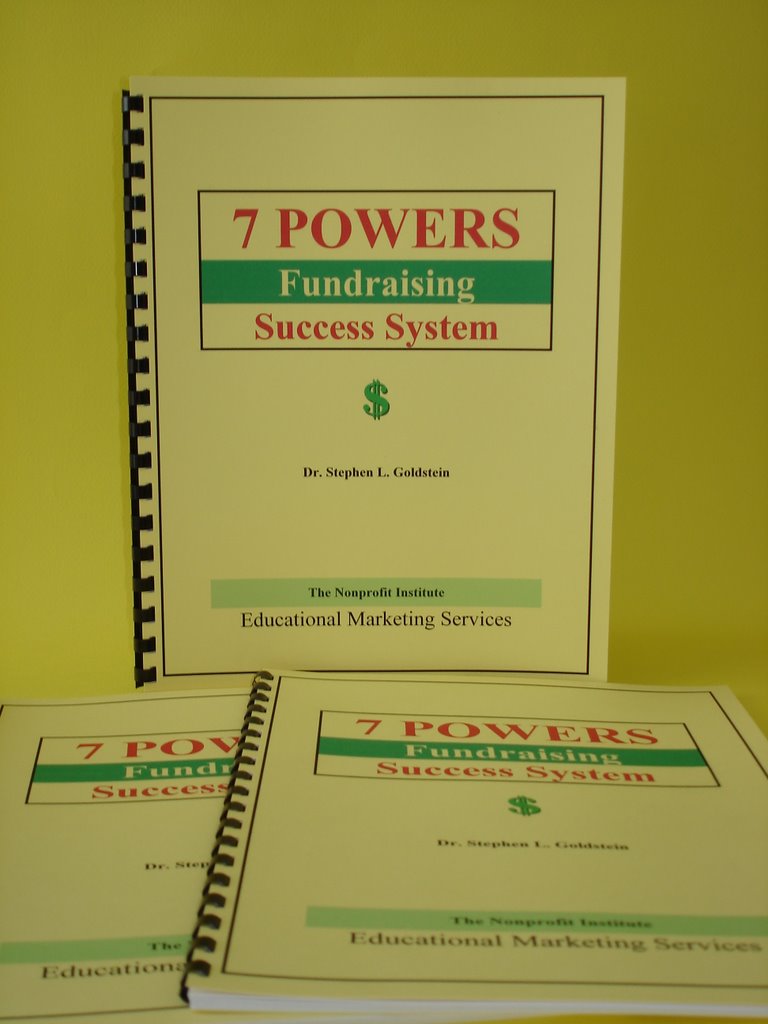
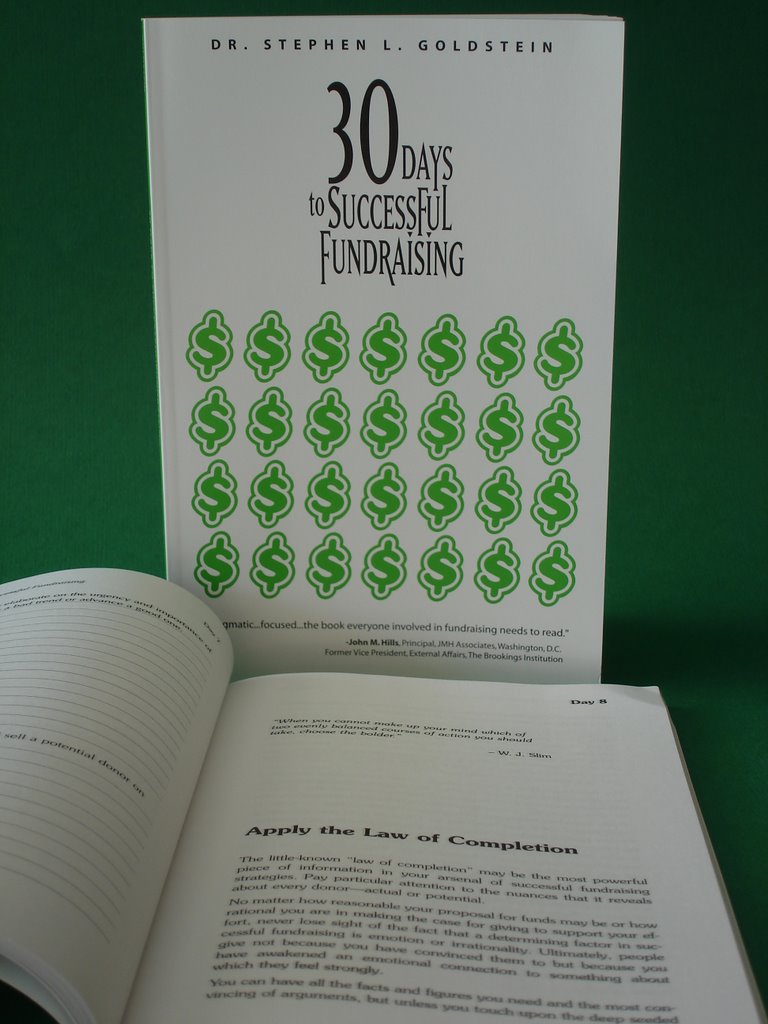
Stephen Goldstein's 7 POWERS Fundraising Success System has revolutionized the training of nonprofit board members, staff, and volunteers in the skill most crucial to their ongoing success. It is regularly offered across the county. Dr. Goldstein's nationwide bestseller, 30 Days to Successful Fundraising, is available through www.amazon.com, www.barnesandnoble.com, other online booksellers, and bookstores everywhere.


Contact: Dr. Stephen L. Goldstein, The Nonprofit Institute, Educational Marketing Services, Inc.; 1448 NE 55th Street, Fort Lauderdale, FL 33334. Phone: 954-772-4455; e-mail: trendsman@aol.com.

Labels: , , , , , , , ,

Sunday, September 03, 2006

"Proven formulas . . . for your fundraising success"

7 POWERS Fundraising Success System developed by Dr. Stephen L. Goldstein

Benefit 1: WORKSHOP
You experience a comprehensive workshop and progress through unique materials that introduce you to the 7 proven powers . . . not just talk . . . step-by-step formulas that produce the results you want and need

Benefit 2: "AFTER-WORKSHOP"
You receive your FREE copy of Dr. Goldstein's international bestseller, 30 Days to Successful Fundraising. (See reviews on www.amazon.com or www.barnesandnoble.com.) By progressing through it AFTER your workshop, you continue its benefits by tailoring its strategies to your ongoing success.

Benefit 3: "AFTER-WORKSHOP"
You are entitled to UNLIMITED, FREE, PERSONAL e-mail and/or phone consultation with Dr. Goldstein for 30 days AFTER your workshop.

For further information, call 954-772-4455 or e-mail: trendsman@aol.com

Labels: , , , , , , , ,

Saturday, August 05, 2006

7 POWERS Fundraising Success System


A Taste of the 7 POWERS Fundraising Workshop:
The "Science" of Fundraising
by Dr. Stephen L. Goldstein, consultant and author of 30 Days to Successful Fundraising

7 POWERS Workshops are scheduled nationwide. Scroll down to the bottom of the blog for details.
My purpose in writing columns and giving workshops is to show people that fundraising isn’t something mushy and mysterious. There are proven formulas--7 POWERS, to be exact--you can put to work for you.

POWER 1: The Power of One. Fundraising is powered by motivated individuals who understand that they have to take complete responsibility for making things happen. You can have the power of Mother Teresa or Mahatma Ghandi. Taking responsibility doesn’t mean doing everything yourself, but setting your commitment in motion.
Remember this formula: one person approaching just one other person for a contribution every day for 365 days would reach 365 people. But 10 people committed to doing it would reach 3650 people--without spending any money. If 100 people aligned for a common worthy purpose, they’d reach 36,500--and could raise $365,000, if everyone gave just $10. Grasp The Power of One and you’re on your way to boundless success.


POWER 2: The Power of an Idea. For individuals to be powerful, they have to be armed with a powerful message. (You can’t be a successful fundraiser if you just want to do something noble, but airy--like "bringing peace to the world.") 7 POWERS reveals the 5-part formula for gauging the power of an idea: It (1) reverses a negative trend, (2) seems doable, (3) makes financial sense, (4) goes for the gut, (5) is measurable.

POWER 3: The Power of Creating Demand. From "saying it" in pictures to creating a blog, writing letters-to-the-editor, creating partnerships, there’s a formula--30 FREE powerful ways--you can create what Victor Hugo called "an idea whose time has come."

POWER 4: The Power of People. Capitalize on the Power of People by using the formula to create a "Circle of 10." With an informal group of people advising you and helping you reach 10 others like themselves, you have potentially 100 advocates/mentors/door-openers propelling your success--but you have to follow the formula.

That’s a taste of the 7 POWERS. For e-mail & phone contact, scroll down to the bottom of this blog.

Labels: , , , , , , , ,

Saturday, April 01, 2006

"The Fundraising Guru"

Your Fundraising Quotient: A Review of the Basics
by Stephen L. Goldstein, consultant and author of 30 Days to Successful Fundraising
Every year, successful fundraisers assess themselves and the primary organization for which they raise funds. Here are 10 key measures you can use. (Follow the instructions at the end of the column, and I’ll help you improve.)
Organizational Fundraising Quotient: On a scale from 1 (I’m not happy with how well we do) to 10 (I’m ecstatic), circle the number to rate your nonprofit:
1. We have a marketable idea that makes people want to contribute: 1 2 3 4 5 6 7 8 9 10
What could improve the score? ______________________________
2. We follow the fundraising cycle (research, strategy, implementation, evaluation): 1 2 3 4 5 6 7 8 9 10
What could improve the score? ______________________________
3. We have a convincing Case Statement: 1 2 3 4 5 6 7 8 9 10
What could improve the score? ______________________________
4. Our board of directors takes the lead in fundraising : 1 2 3 4 5 6 7 8 9 10
What could improve the score? ______________________________
5. Our public relations supports our fundraising: 1 2 3 4 5 6 7 8 9 10
What could improve the score? ______________________________
Total Organizational Score: _____
Your Personal Fundraising Quotient: On a scale from 1 (I’m not pleased) to 10 (I’m thrilled), circle the number that rates you as a fundraiser:
1. I personally donate, so I can ask others to donate: 1 2 3 4 5 6 7 8 9 10
What could you do to improve your score? ____________________________
2. I follow the fundraising cycle (research, strategy, implementation, evaluation): 1 2 3 4 5 6 7 8 9 10
What could you do to improve your score? ____________________________
3. I know how to state the case for my organization: 1 2 3 4 5 6 7 8 9 10
What could you do to improve your score? ____________________________
4. I am comfortable asking for major donations: 1 2 3 4 5 6 7 8 9 10
What could you do to improve your score? ____________________________
5. I know how to use public relations to enhance fundraising: 1 2 3 4 5 6 7 8 9 10
What could you do to improve your score? ____________________________
Total Personal Score: _____
E-mail me your results at trendsman@aol.com. Then, we can work together to enhance your future score.#

Labels: , , , , , , , , ,

Saturday, January 07, 2006

"The Fundraising Guru"

The Most Successful Fundraisers
Create a Tsunami
Stephen L. Goldstein, consultant & author of 30 Days to Successful Fundraising, which is available through www.amazon.com, www.barnesandnoble.com, other online booksellers, and bookstores nationwide.

It is the question everyone who works for a nonprofit everywhere asks me--nationally and internationally. The head of a school in Mexico posed it during my speech to 30,000 participants in a satellite videoconference throughout Central and South America and the Caribbean. A week later, professionals at a workshop in Houston asked me the same question.

So, the question: How do I write a successful proposal? Naturally! The answer: Whether you are asking for money from a foundation, corporation, government agency, or individual, the same basic principle applies: You have to create a tsunami.

The tsunami that struck Southeast Asia at the end of 2004 made headlines around the world. But what do you picture when I say tsunami? Devastation? Loss of life? Scenes of horror? Chaos? All of those terrible images, I’m sure.

But what else do you picture? People rushing to help? Exactly! There was an enormous, obvious, sudden need. No one had to write a proposal asking people to help the victims of the tsunami. Everyone could see the compelling crisis. It was right in front of their eyes. And people immediately responded generously to the urgent need for resources.

Tragically, we have the equivalent of tsunamis every day of every year, everywhere around the world. Millions of children go hungry. Millions of men and women are illiterate. Untold numbers of men, women, and children die because they drink polluted water. Countless children die because they have never received vaccinations that would cost just pennies. The list goes on and on. And yet, as devastating as these and similar circumstances are, there is rarely a sense of urgency about those situations--certainly nothing equal to the outpouring of money and assistance for victims of the 2004 tsunami.

The job of successful fundraisers is to simulate a tsunami in their proposal by following five simple criteria to create a marketable idea.

First, a strong marketable idea has context. It relates to a major, negative trend that gives it the kind of urgency we saw in the Southeast Asia tsunami.

Second, it asks for money for a clear, unique, new solution to reverse the negative trend.

Third, a strong marketable proposal seems doable. It isn’t just pie-in-the-sky. It makes financial sense.

Fourth, it inspires people. It offers more than just a solution to a problem.

Fifth, it produces measurable results. Funders look upon the money they give as investments, not just acts of charity. Successful proposals have built-in measures of effectiveness. They aim to show funders that there is a return on their investment.

So, follow the strategy of the most successful fundraisers by simulating a tsunami. It will lead to only smooth sailing for you and your organization. E-mail Stephen Goldstein your comments and questions at trendsman@aol.com. He'll answer you personally.#

Labels: , , , , , , , , ,

Monday, September 19, 2005

7 POWERS Fundraising Workshop

Attention: Nonprofit fundraisers, board members, paid staff, and volunteers:
  • Dr. Stephen Goldstein's 7 POWERS Fundraising workshops are offered nationwide.
  • Schedule a workshop for your organization, tailored to meet your specific needs.
  • Sponsor a workshop for the nonprofit community in your area.
  • Choose full-day or half-day format.
  • All participants receive a copy of Dr. Goldstein's best-selling 30 Days to Successful Fundraising.
  • All participants are entitled to free, online consulting with Dr. Goldstein for 30 days after the workshop.

For further information about workshops, e-mail Dr. Goldstein at trendsman@aol.com or call 954-772-4455, Educational Marketing Services.

Labels: , , , , , , , , ,